





Clinton River Spillway
Project Features/Highlights
- 1 Over two-miles of stream/habitat restored
- 2 Streambank stabilization and creation of offline pools
- 3 Improved spillway function and flood capacity
- 4 Riparian vegetation restoration
- 5 Invasive species removal
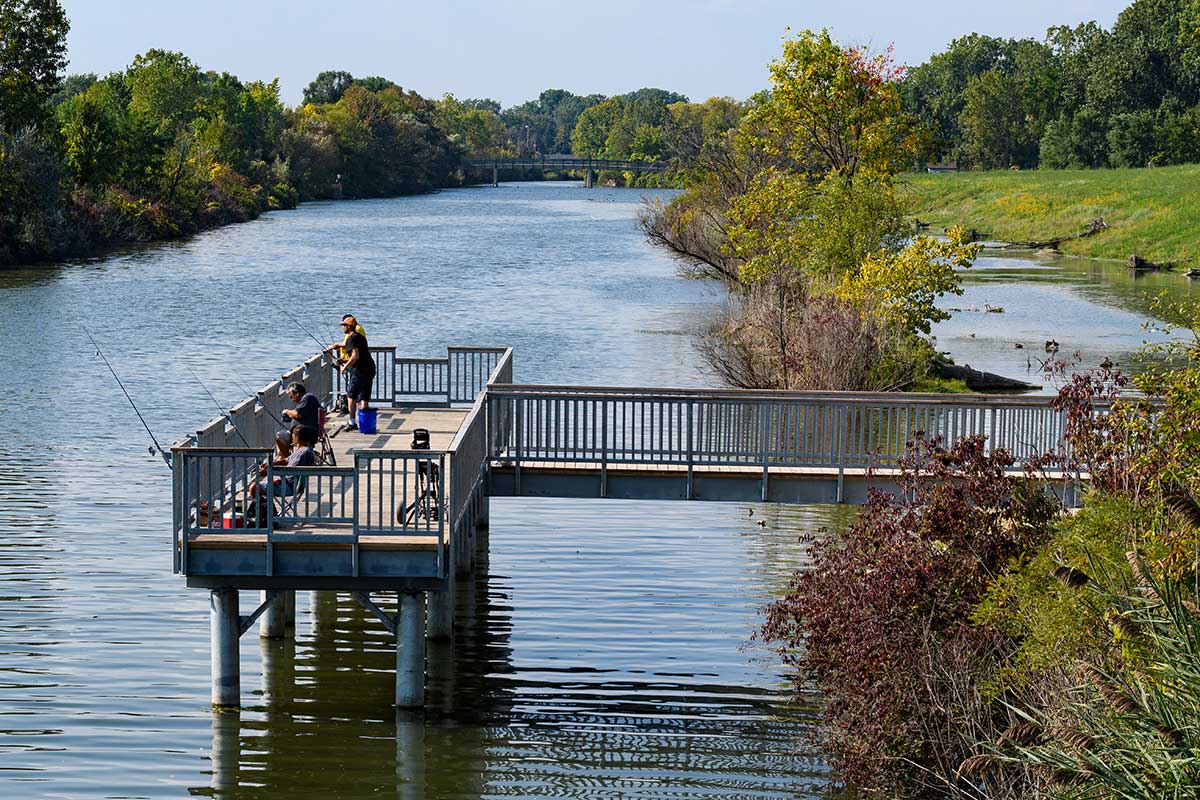
- 6 Trail and recreation enhancement
CLIENT NAME: Clinton River Spillway Intercounty Drain Drainage Board
LOCATION INFORMATION: Macomb County
SERVICE INFORMATION: Watershed Management
Project Details
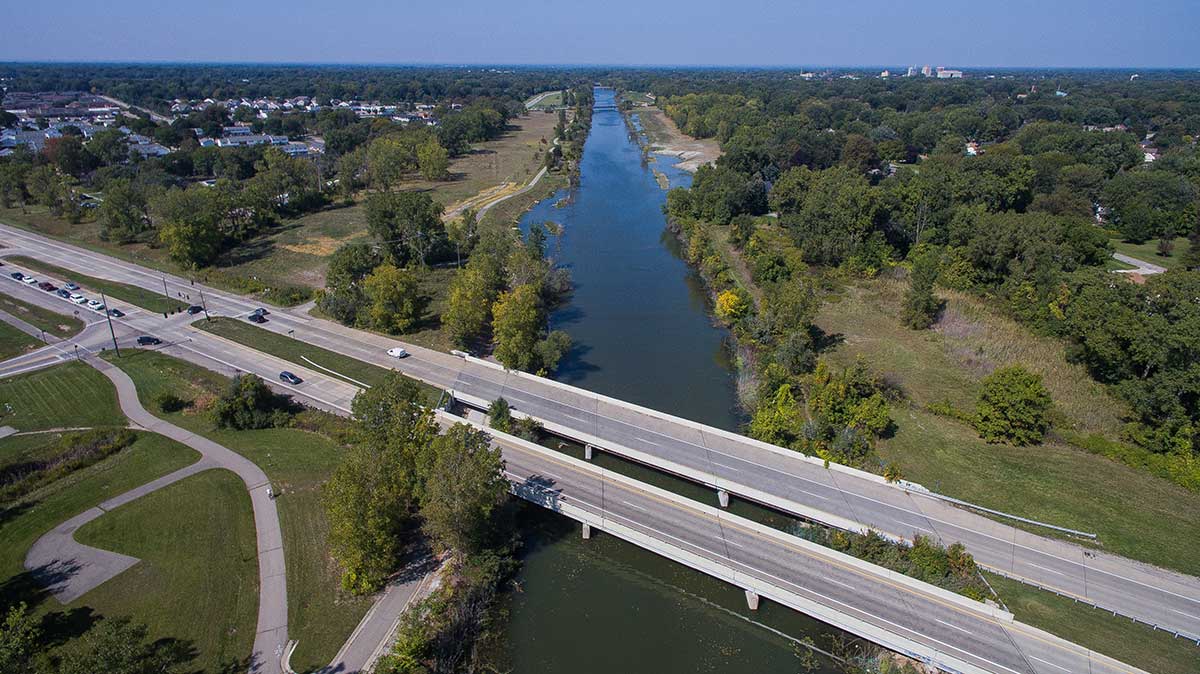
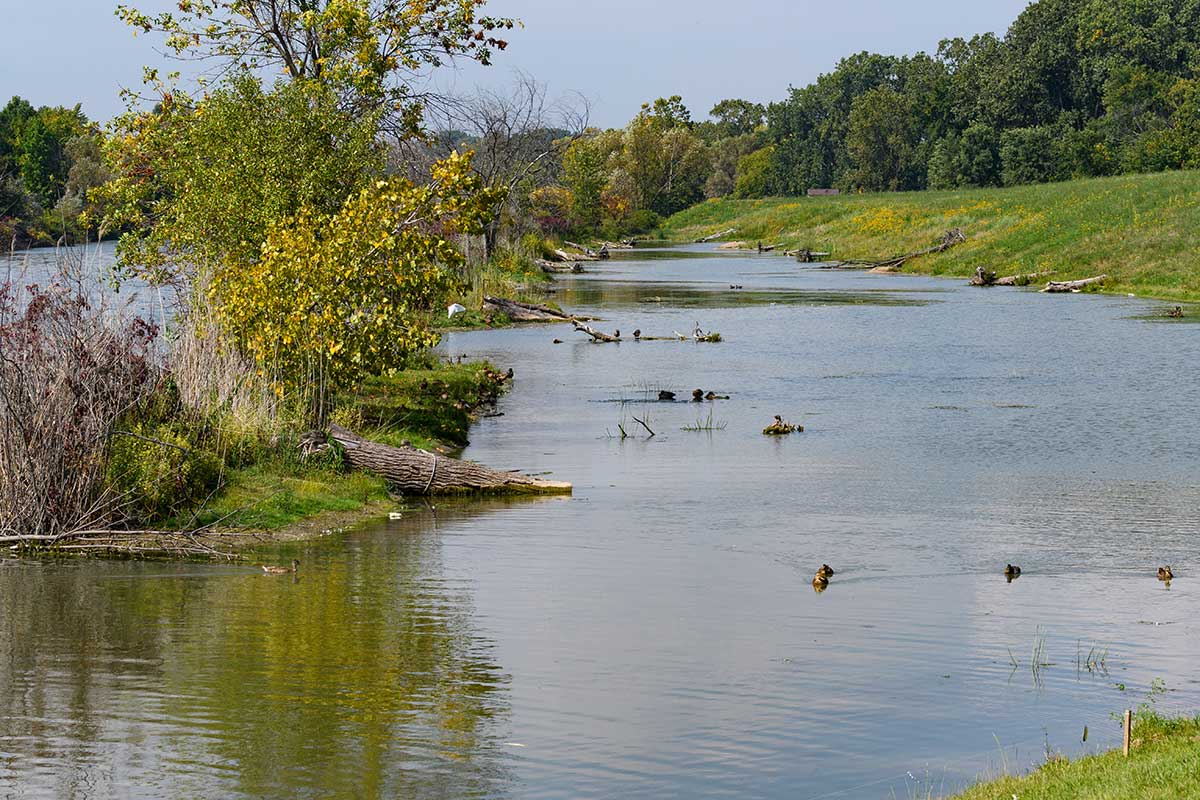
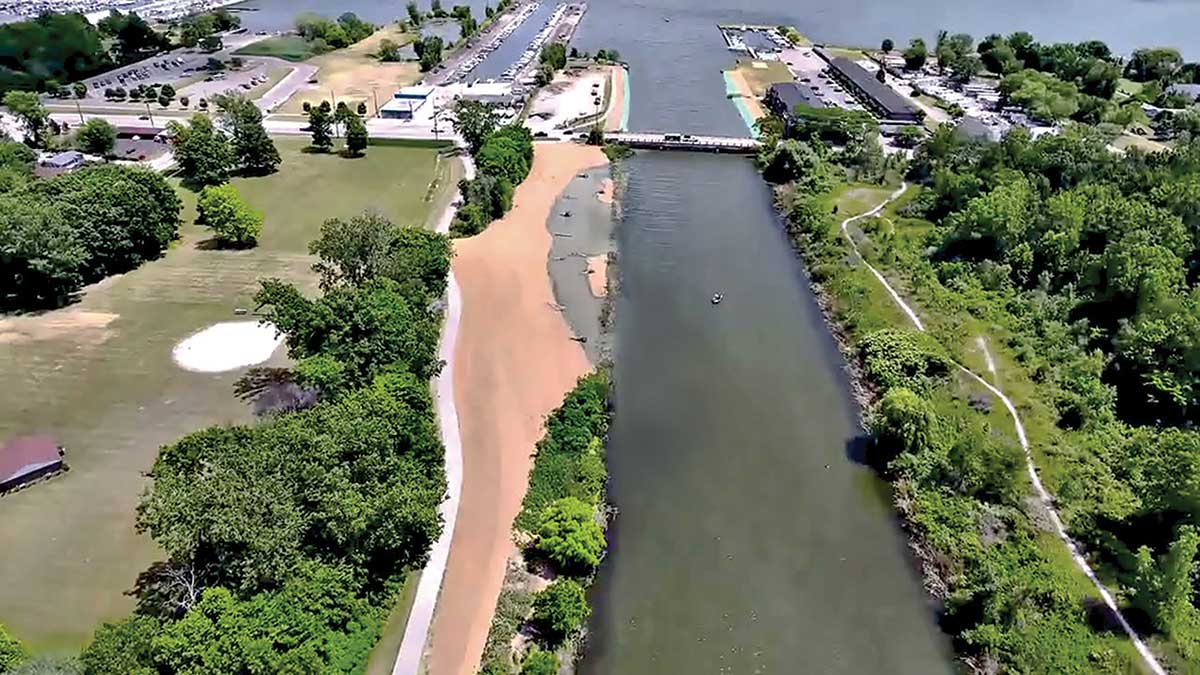
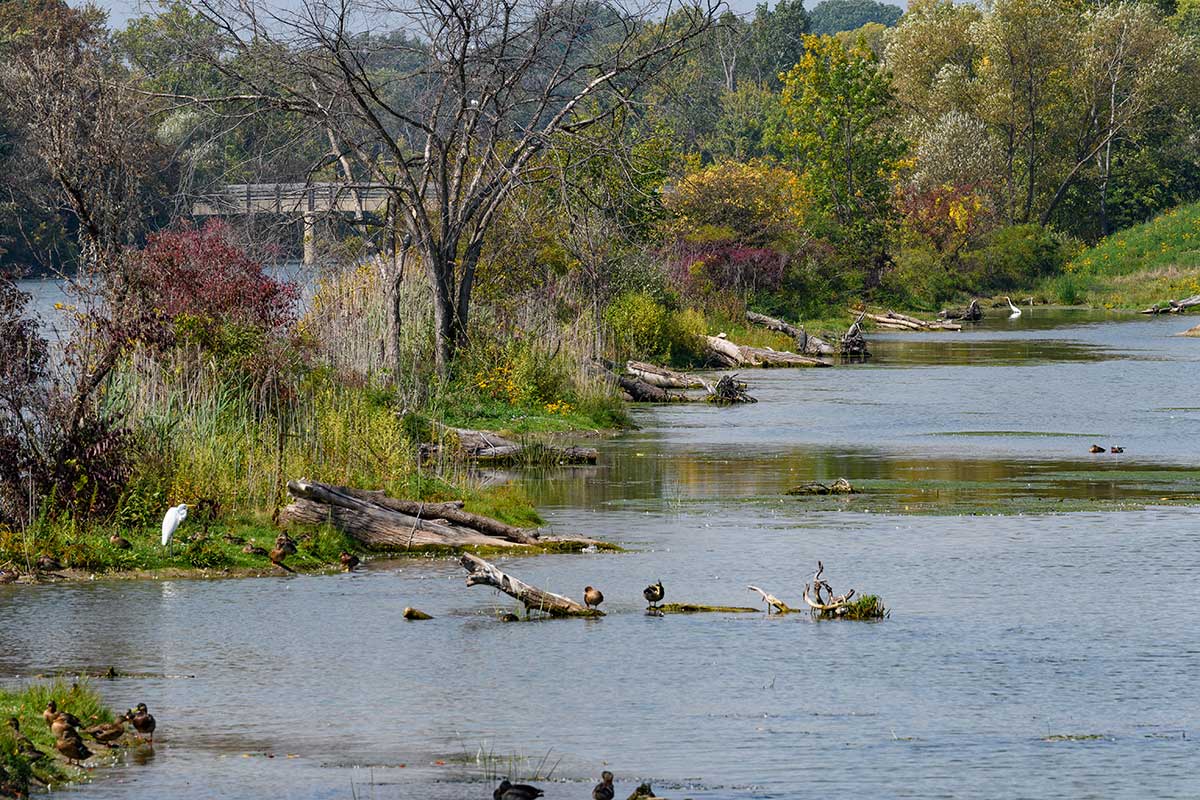
Built in 1949 by the United States Army Corps of Engineers to alleviate flooding in Mount Clemens, Clinton Township and Harrison Township; The Clinton River Spillway’s effectiveness at controlling floodwater had created a host of environmental problems. Connectivity to Lake St. Clair was impacted – hampering fish passage, creating habitat loss, and promoting growth of invasive plant species. Changes in hydrology, due to the installation of the weir, led to sediment deposition in the natural channel and downcutting and erosion in the spillway.
Efforts to restore the damaged habitat along the two and one-half mile, 80-foot wide man-made channel took shape in 2011 when the Macomb Public Works Office, on behalf of the Clinton River Spillway Intercounty Drain Drainage Board, was awarded initial funding of $339,500 through the National Oceanic and Atmospheric Association’s (NOAA) Great Lakes Restoration Program for habitation restoration planning. One of 25 habitat restoration projects listed in the public advisory committee’s 2011 strategy for removing loss of fish and wildlife habitat beneficial use impairment (BUI) in the Clinton River Remedial Action Plan; the Clinton River Public Advisory Council had selected this project as its highest priority for the 2011 funding cycle. Hubbell, Roth & Clark, Inc. (HRC) led the project team on the NOAA-funded engineering and design phase of that two-year project, which was completed in 2013.
In 2014, the Clinton River Spillway Phase I Implementation Plan, designed by HRC, was awarded $2.5 million by NOAA. The Clinton River Spillway Intercounty Drain Drainage Board soon approved HRC as the lead consultant. The firm, along with its team of sub-consultants, immediately began performing grant administration, monitoring, and construction engineering services on the spillway. An additional $1.5 million from the Environmental Protection Agency completed the financial circle, giving the project 100 percent funding status for this phase.
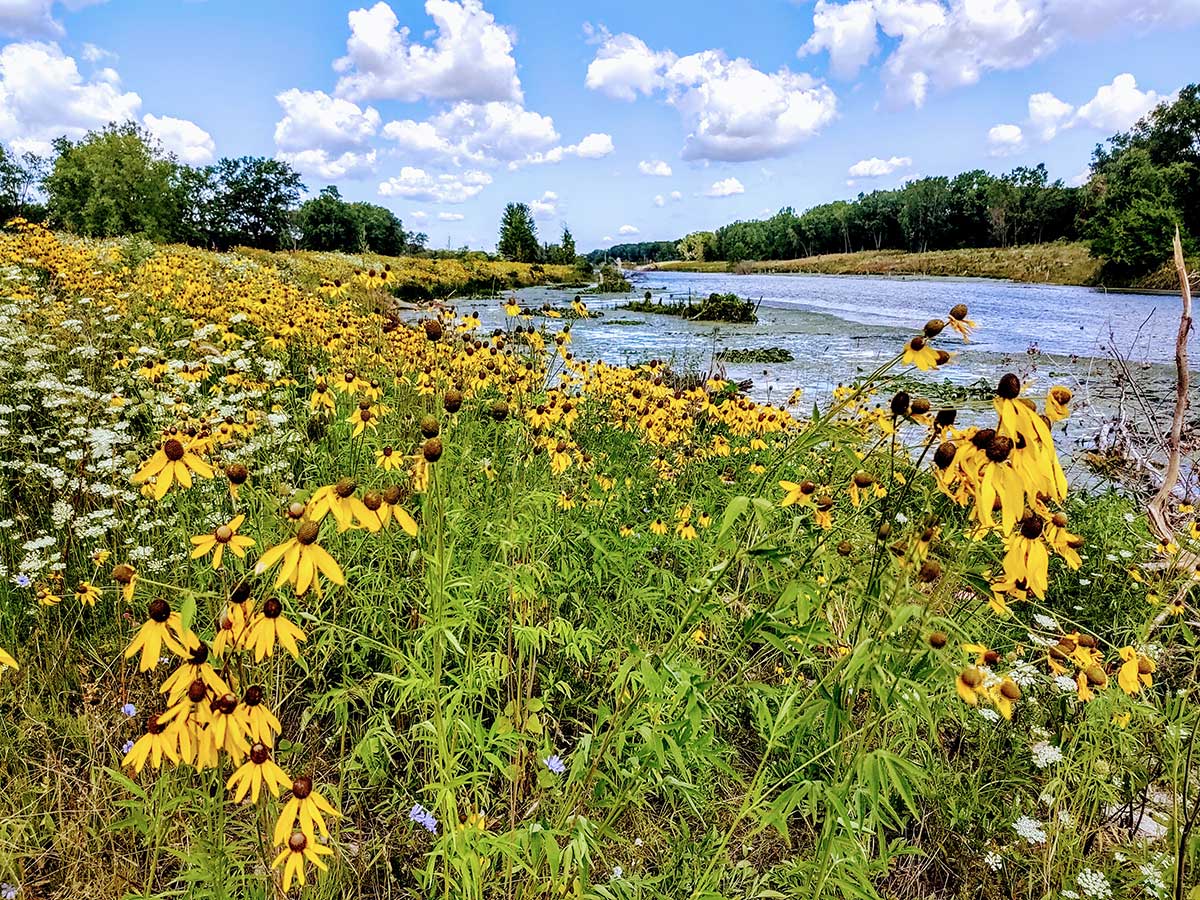
The ecological enhancement project included the excavation of approximately 120,000-cubic-yards of upland bank material, including approximately .32-acres of poor quality emergent wetland and 2,100- feet of bank treatment, for the creation of approximately 12.8-acres of riparian emergent and shrub-scrub wetland habitat.
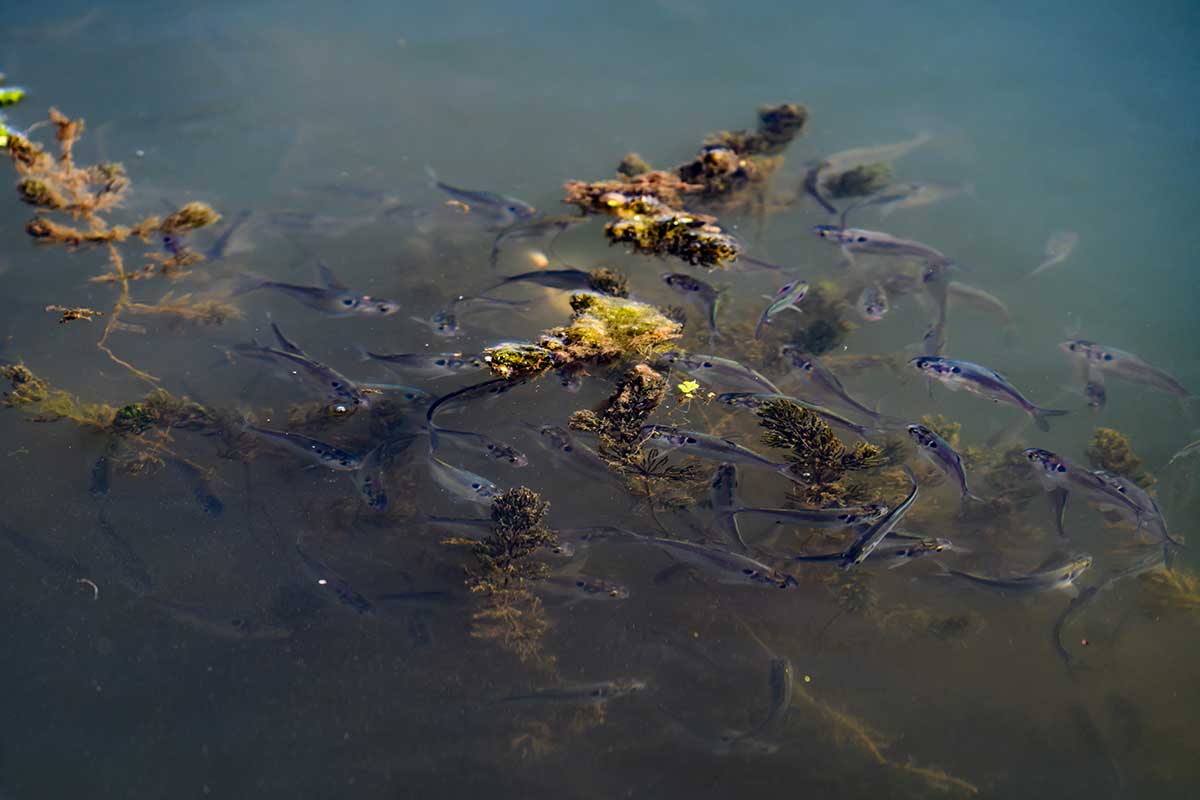
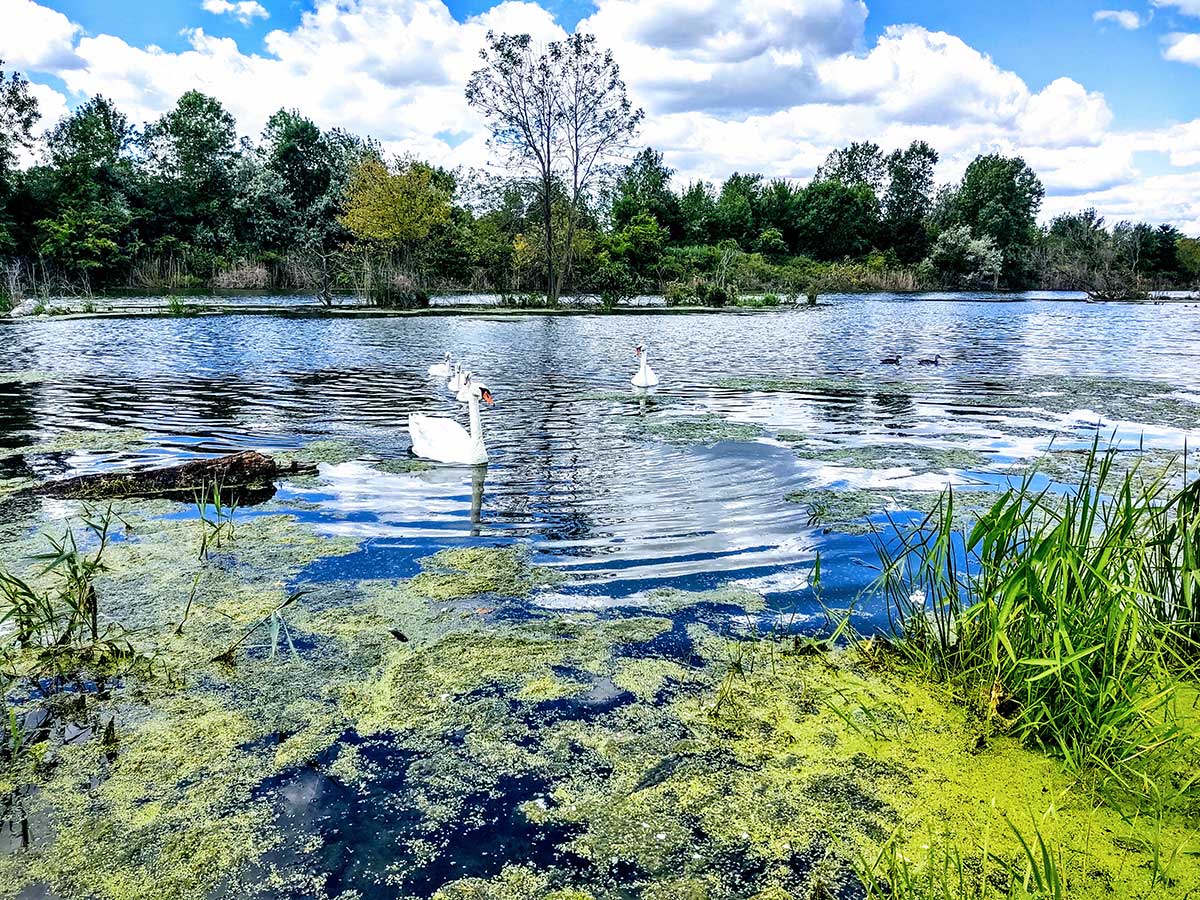
Designed to increase native species cover, fish spawning and other wildlife diversity within the Clinton River Spillway and adjacent Lake St. Clair shoreline, successful completion of this project reduces sediment loading and modifies bank heights through bank stabilization. A significant component of this project also targets the removal, treatment and determent of invasive species.